
How Is University Education Being Developed in South Ostrobothnia?
UCSEdu: Strengthening University Education in South Ostrobothnia
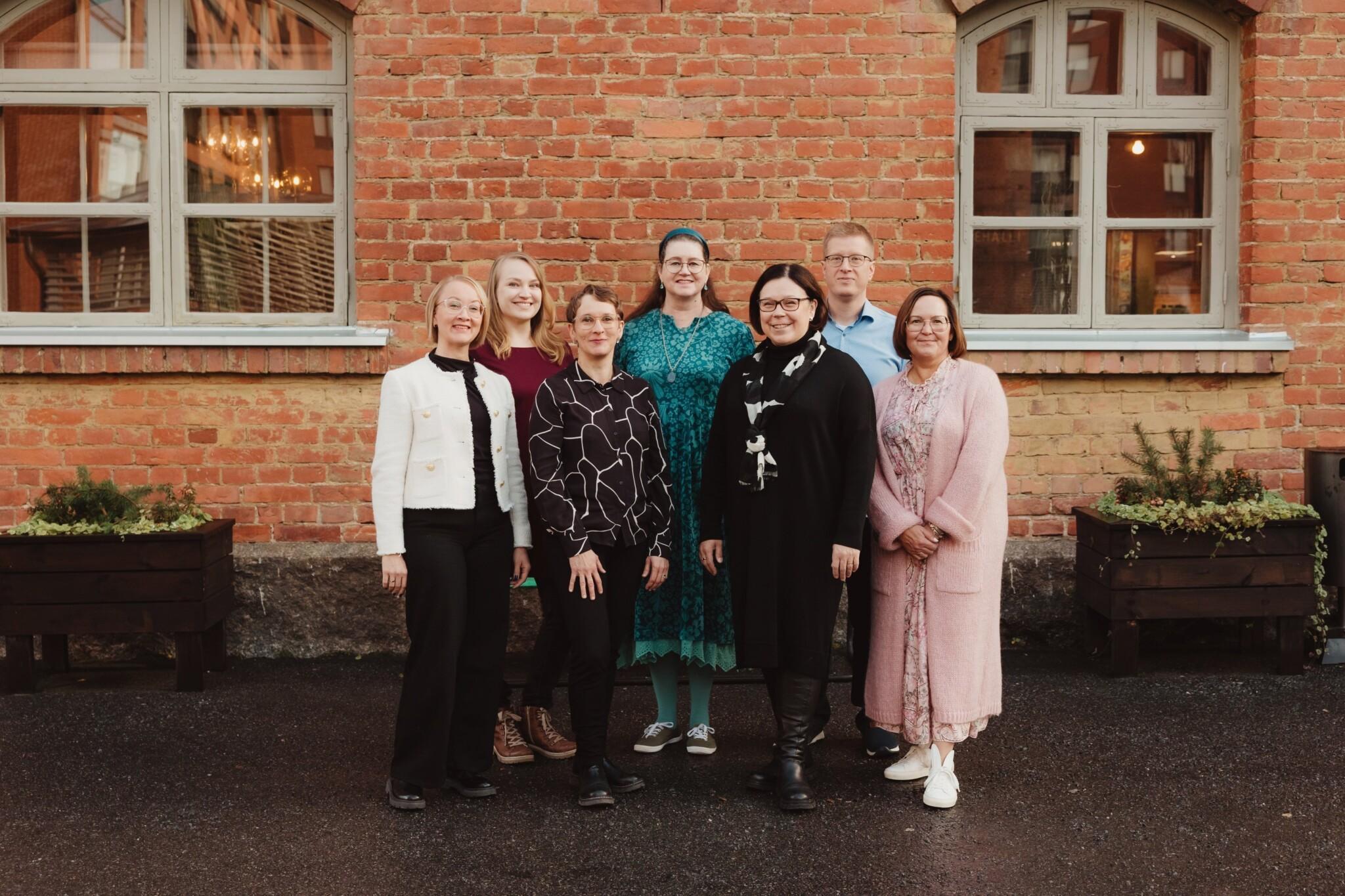
Mari Kekola works as a specialist in the Coordination Unit of the University Consortium of Seinäjoki. In her role, she promotes collaboration among the consortium’s four partner universities and supports the development of regional university education.
She served as the project manager of the three-year UCSEdu project, which concluded in May. Coordinated by Tampere University and funded by the European Regional Development Fund (ERDF), the development project involved all member universities of the University Consortium. According to Kekola, the project’s objective was to develop ways to increase the volume of university education in South Ostrobothnia and, consequently, the number of highly educated professionals in the region. The aim is to achieve this in a sustainable and long-term manner by creating educational pathways rather than offering isolated educational initiatives.
What Were the Results of the Project?
The first outcome was the strengthening of the educational offering, which was pursued by increasing the number of degree programmes available. New degree programmes were also launched, including Tampere University’s Master’s Programme in Social Work. Kekola notes that the range of continuous learning opportunities was expanded as well, for example through study modules focused on artificial intelligence.
The second outcome consisted of newly developed and piloted student services. During the project, the number of degree students at the University Consortium increased, creating a need to respond more comprehensively to students’ needs. Three significant services were developed: a Student Handbook, the GraduUCSi thesis supervision service, and alumni activities, all designed to support students studying at the University Consortium.
The third outcome was the creation of new operating models to support educational development. Mari Kekola explains that the goal is for university stakeholders to come together more frequently, creating opportunities for mutual learning. According to her, this could continue through an annual education forum featuring expert presentations and discussions on the current state and future of education provided in Seinäjoki. In addition, a framework called the Growth Stairs for Working Life Collaboration was created to make different forms of cooperation between university education and working life more visible and to help develop collaboration with companies step by step.
For the University Consortium of Seinäjoki, it is important that education is developed through collaboration among various stakeholders. Kekola explains that the project developed an operating model for multi-actor university cooperation. Its objective is to concretely improve collaboration among all four universities, while also strengthening systematic cooperation with their main campuses. In addition to university collaboration, a wide range of stakeholders are involved, and their cooperation helps enable the long-term development of education.
The fourth outcome includes various studies, reports, and publications produced during the project. One of these was the South Ostrobothnia Competence Barometer, through which information was collected from companies regarding the skills they need, the types of professionals they are looking for, and their demand for international talent. The project also produced two publications, Educational Activities in Finnish University Consortia and A Spirit of Growth, both of which examine university education and university consortia in Finland.
Examples of Work-Life Collaboration Field Courses
The field course concept is a unique model developed in Seinäjoki, in which groups of students from the main campuses of the universities affiliated with the University Consortium of Seinäjoki visit the city to participate in working life collaboration activities. According to Mari Kekola, the concept is closely connected to companies, industry, and the public sector in South Ostrobothnia. Through these courses, students gain direct exposure to working life, observe how organizations operate, and contribute to their development.
The concept includes various project-based assignments and development tasks. Companies provide real-world challenges for students to solve, and Kekola reveals that some of the students’ ideas have already been implemented by the companies. Field courses also give businesses the opportunity to identify and recruit talent, which Kekola considers a major benefit from the companies’ perspective. As a result, these courses can help students establish connections to Seinäjoki and the wider South Ostrobothnia region.
Text: Siiri Keltamäki