
Researching Sustainable Food Systems Through International Collaboration
Silvia Gaiani leads a research group at the University of Helsinki’s Ruralia Institute focusing on sustainable food-system transformation and entrepreneurship. One of the aims of the international collaboration network she leads is to develop impactful research, development and innovation projects and raise international awareness of the development taking place in South Ostrobothnia’s food sector. Her work combines several important themes.
“My work lies at the intersection of food-system sustainability, resilience, innovation, entrepreneurship, and the human and social sciences,” Gaiani explains.
One of Gaiani’s key research themes is sustainable food-system transformation. But what does this mean in practice?
“Sustainable food-system transformation means renewing food-related production, processing, distribution, consumption, and waste-management practices so that the entire system becomes environmentally sustainable, socially just, economically viable, and resilient in the long term,” says Gaiani.
This is a multi-level transformation that extends across the entire food system. According to Gaiani, it is not merely about individual actions.
“In practice, this is not simply about making individual products or companies ‘greener’. Rather, it involves transforming the structures, practices, infrastructures, policies, business models, and relationships between actors throughout the food system. In the Nordic countries, sustainable food-system transformation can be seen as a transition away from a system focused primarily on efficient production and consumption,” she explains.
Why Is Sustainable Food System Transformation Especially Important in South Ostrobothnia?
One of the objectives of the collaboration network is to strengthen South Ostrobothnia’s profile as an internationally recognised food and agricultural region. The network has already opened new international partnerships for regional stakeholders. But why is research on sustainable food-system transformation particularly important for the region?
“South Ostrobothnia is not only a place where food-system challenges are clearly visible. It is also a kind of living laboratory where researchers can examine how an established regional food economy can evolve in a sustainable way,” Gaiani says.
According to Gaiani, several factors highlight the importance of this research in the region.
“The first is that a strong food economy brings both opportunities and responsibilities. Agriculture, food processing, and related businesses are central parts of the regional economy. Therefore, transformation should strengthen competitiveness while reducing environmental impacts, rather than replacing the existing system altogether.”
Collaboration is a key element in all development efforts.
“The region can move beyond food production alone towards a more integrated regional food system. Research can explore how farmers, processors, retailers, restaurants, public procurers, consumers, municipalities, and research organisations can work together instead of operating as separate parts of the value chain,” she adds.
Sustainability at the Heart of Transformation
Environmental sustainability also plays a central role in the discussion. As Gaiani noted earlier, the overall goal is to create a food system that promotes both sustainability and social justice.
“Climate and environmental pressures require new production models. Soil health, biodiversity, and adaptation to changing climatic conditions increasingly influence the viability of agriculture. South Ostrobothnia provides an important setting for addressing these challenges through research,” she says.
South Ostrobothnia also has strong potential to become a leading sustainable food region on an international scale.
“The region has excellent opportunities to develop circular food systems. The concentration of agricultural and food-sector activities enables better utilisation of nutrient flows, side streams, biomass, and energy flows. Connections between farms, food industries, and the bioeconomy can be strengthened.”
Achieving this transformation requires new forms of collaboration and governance, as well as the ability to ask the right questions.
“A key research question is not only: ‘Which technologies or practices are sustainable?’ but also: ‘How can regional actors implement them together?’ This makes South Ostrobothnia an excellent environment for participatory research and living-lab activities,” Gaiani reflects.
The shift towards greater sustainability is also visible in regional businesses, which Gaiani sees as key actors in the transformation.
“A large share of the regional food economy is built on small and medium-sized enterprises. Research can identify practical models that help companies adopt circular economy principles, digitalisation, sustainable sourcing, new products, and more resilient supply chains without creating excessive costs or administrative burdens.”
How Does International Collaboration Strengthen Research Quality and Impact?
International collaboration is at the core of research on sustainable food-system transformation, providing a deeper and broader understanding of the issues being studied.
“International collaboration improves research quality by bringing together complementary expertise, methodologies, and knowledge from different operating environments. Comparative research between countries also strengthens the reliability and applicability of research findings in different contexts,” Gaiani says.
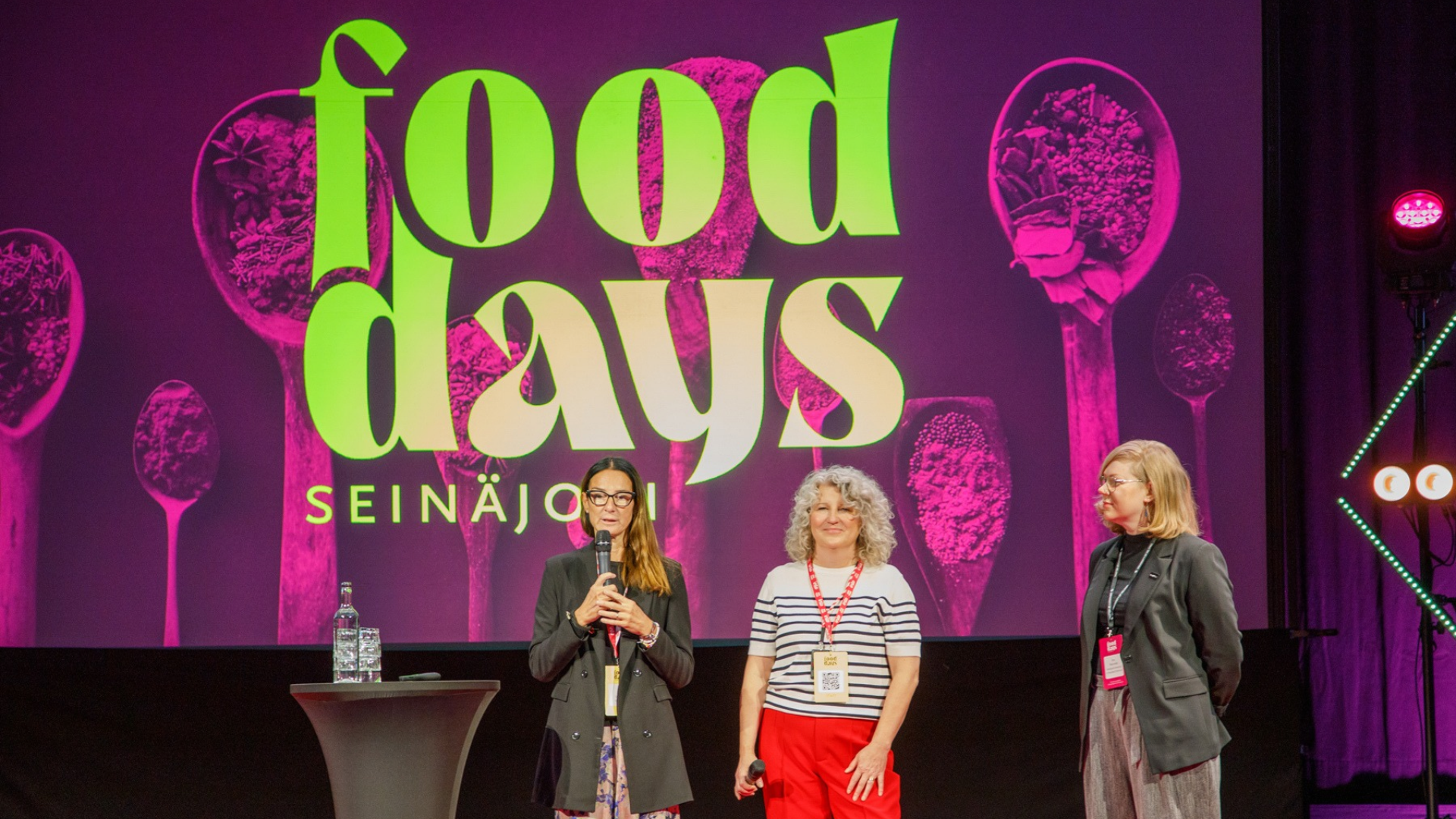
International collaboration can also be seen in everyday life through various networks and events. One of the most prominent examples of cooperation between different communities is the annual Food Days event organized in Seinäjoki. The event brings together decision-makers from the entire food sector, researchers, developers, and startup companies from around the world.
“Collaboration increases research impact by bringing together scientific knowledge with perspectives from policy, business, and society. At the same time, it facilitates the adoption and application of new solutions in different settings. This is why I am always enthusiastic about building new partnerships,” she adds.
Text: Siiri Keltamäki
Article Picture: Petri Olli